14th August
28th June
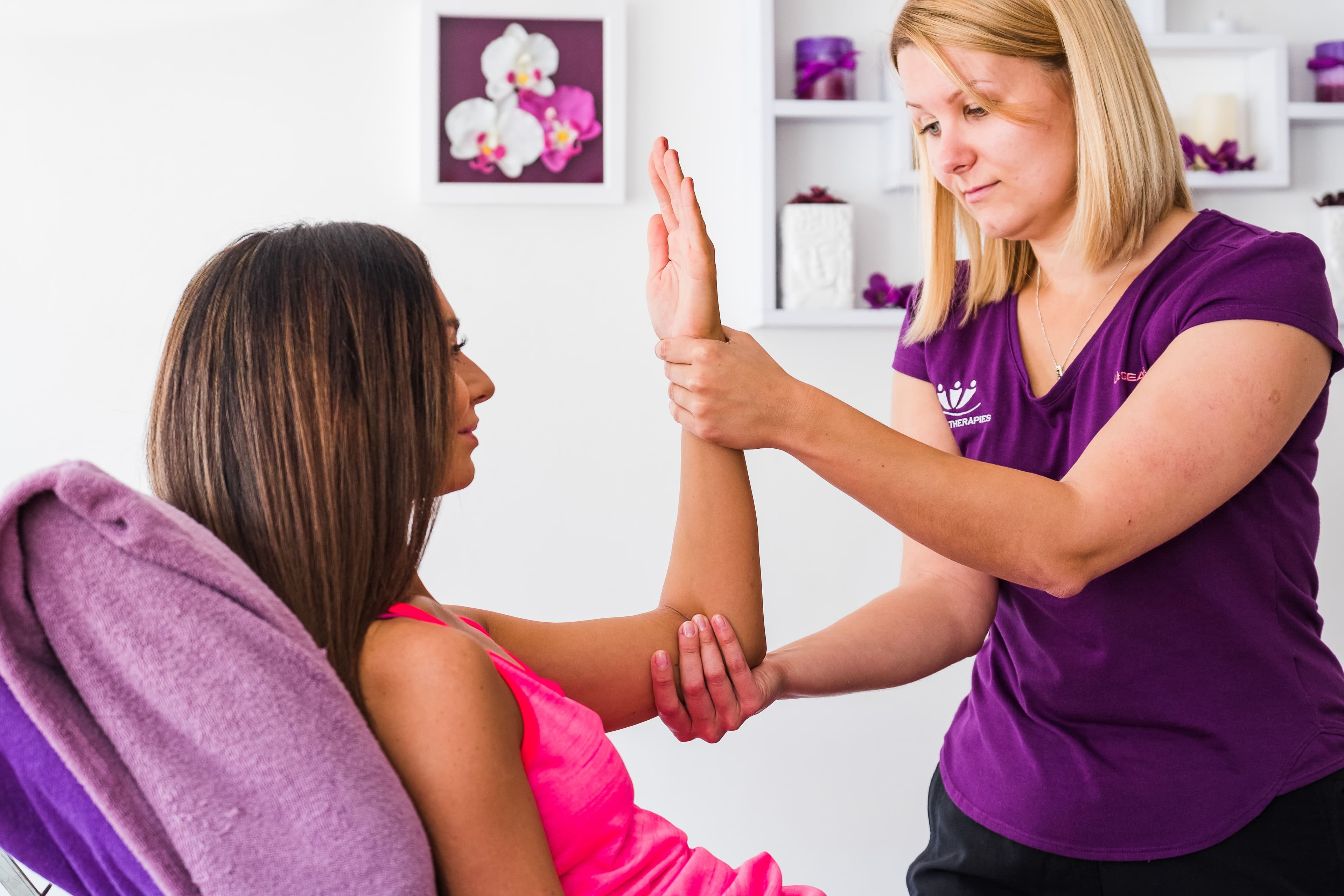
As the strawberries and cream come out and the world tunes into the Wimbledon Championships, elbow pain often becomes a hot topic — particularly tennis elbow. But despite the name, you don’t need to be playing centre court (or even playing tennis at all) to suffer from it.
In fact, both tennis elbow and golfer’s elbow are incredibly common among everyday golfers, leisure tennis players, and people who’ve never picked up a racket or club.
So how do you tell the difference — and what can you do about it?
What Is Tennis Elbow?
Tennis elbow (lateral epicondylitis) causes pain on the outside of the elbow. It’s linked to overuse of the forearm muscles responsible for gripping and wrist extension.
Despite its name, tennis elbow is often caused by:
Leisure tennis players are especially prone when they play infrequently but intensely — perhaps inspired by Wimbledon coverage 🎾
Common symptoms include:
What Is Golfer’s Elbow?
Golfer’s elbow (medial epicondylitis) affects the inside of the elbow and involves the muscles used for wrist flexion and forearm rotation.
It’s common in:
You don’t need to play 18 holes a week to develop golfer’s elbow — occasional rounds, driving range sessions, or poor swing mechanics can be enough.
Symptoms often include:
Tennis vs Golfer’s Elbow — The Key Difference
Tennis Elbow
Golfer’s Elbow
Pain on the outside of the elbow
Pain on the inside of the elbow
Wrist extension overload
Wrist flexion overload
Common in tennis, desk work, DIY
Common in golf, tennis, gym
Gripping worsens pain
Gripping and wrist flexion worsen pain
Both conditions are overuse injuries, often building up gradually rather than appearing suddenly.
Why Everyday Players Are Most at Risk
Professional athletes train consistently, recover properly, and have support teams. Everyday golfers and leisure tennis players often:
That combination makes elbow pain more likely — especially during seasonal spikes like summer golf and Wimbledon-inspired tennis sessions.
How Sports & Clinical Massage Can Help
Massage plays an important role in managing both tennis and golfer’s elbow by addressing the soft tissue causes, not just the painful spot.
Massage can help by:
Importantly, treatment focuses on the forearm, wrist, shoulder, and upper arm, not just the elbow itself.
When to Seek Help
If elbow pain:
…it’s time to address it properly rather than pushing through.
Early treatment often means faster recovery and less time away from the sports you enjoy.
Wimbledon Reminds Us — But It’s Not Just for the Pros
Wimbledon showcases incredible athleticism — but it also inspires thousands of people to pick up a racket, dust off their golf clubs, and get moving. That’s a great thing… as long as your body is supported along the way.
Whether you’re playing social tennis, enjoying a casual round of golf, or simply feeling elbow pain from everyday life, understanding the difference between tennis elbow and golfer’s elbow is the first step toward recovery.
And you definitely don’t need a trophy to deserve proper care 🏆💆♂️